The Minimal Shoe Wardrobe for 2026: 6 Pairs You Actually Need
Key Takeaways
|
✓ Most capsule wardrobes need only 5–7 pairs of shoes to cover everyday wear, travel, work, and different seasons — fewer versatile pairs get worn far more often than larger collections. [thecapsulist.com, May 2026] |
|
✓ The global footwear market is valued at $498.8 billion in 2026 and projected to reach $747.6 billion by 2035 (CAGR 4.6%), driven by demand for comfort-meets-style. [Precedence Research, April 2026] |
|
✓ The 6 non-negotiable pairs for 2026: leather loafer, ballet flat, minimalist sandal, ankle boot, low-profile sneaker, kitten heel mule. |
|
✓ Investment priority: leather loafer first (covers 80% of occasions year-round), then ballet flat, then sandal. The rest are additive. |
|
✓ The golden ratio: 3 flat pairs + 1 low-heel pair + 1 sneaker + 1 boot = a wardrobe that never leaves you without options. |
|
✓ Shop the core pairs at: Guja Mocassini · Guja Ballet Flats · Guja Sandali |
Why 'More Shoes' Is the Wrong Goal
The average woman owns 17–27 pairs of shoes yet regularly wears only 4–5. [The Capsulist, May 2026] The problem is not quantity — it is architecture. Most shoe collections grow through impulse buying around specific outfits, not through deliberate building of a system.
A capsule shoe wardrobe solves this by working the opposite direction: start with the pairs that solve the most outfit problems, in the most scenarios, across the most seasons. According to footwear style analysts, a well-built capsule of 5–7 shoes worn on rotation consistently outperforms a closet of 20+ rarely-worn pairs in terms of daily utility, cost-per-wear, and actual satisfaction. [thecapsulist.com, May 2026]
In 2026, the ideal capsule has a specific shape: flat-first, quality-forward, and scenario-mapped. Here are the only 6 pairs you actually need.
The 6 Pairs: A Scenario-by-Scenario Comparison
|
Pair |
Coverage |
Seasons |
Cost-per-wear |
Replace when |
|
1. Leather loafer |
Office, smart-casual, weekend, travel — 80%+ of occasions |
All 4 |
Very low after 50+ wears |
Sole wears through or leather cracks beyond repair (typically 5–8 years) |
|
2. Ballet flat (pointed or almond toe) |
Casual, office (smart casual), dresses, jeans, weekend — 70% of occasions |
Primarily Spring–Autumn |
Low after 30+ wears |
Sole thins or upper creases beyond reshaping (typically 2–4 years) |
|
3. Minimalist strappy sandal |
Summer casual, evenings, warm-weather dressing — 60% of warm-season occasions |
Spring–Summer |
Medium — seasonal use |
Straps stretch or hardware tarnishes (typically 3–5 seasons) |
|
4. Ankle boot (flat or low block heel) |
Autumn–Winter everyday, layered looks, jeans + dress — 75% of cool-season occasions |
Autumn–Winter |
Very low — worn 3–5 times per week in season |
Sole wears through or heel collapses (typically 4–7 years) |
|
5. Low-profile sneaker (minimal design) |
Weekend, travel, casual — 50% of occasions; essential for high-walking days |
All 4 |
Very low — highest wear frequency |
Loss of cushioning (typically 300–500 km of walking, ~1–2 years) |
|
6. Kitten heel mule / slingback |
Smart-casual evenings, office-to-dinner, weddings — 25% of occasions but irreplaceable |
Spring–Summer primarily |
Higher per occasion — fewer wears |
Heel tip wears down or strap breaks (typically 2–4 years) |
Pair-by-Pair Deep Dive
Pair 1 — The Leather Loafer: Your Most Important Shoe
The leather loafer is the anchor of the 2026 capsule wardrobe. It covers more daily scenarios than any other single shoe: office meetings, weekend errands, dinner out, airport days, school runs, and everything in between. The global loafer market was valued at $34.08 billion in 2025 and is growing at a CAGR of 3.7% — a clear signal that this is not a passing trend. [SkyQuest Research, 2026]
In 2026, the right loafer is flat or near-flat, with a slim sole, almond or pointed toe, and either no hardware or subtle horsebit/penny detail. Supple leather is preferred over stiff. If you own only one loafer, make it black or cognac smooth leather.

- Best scenario coverage: Office, smart-casual, travel, jeans, dresses — effectively every scenario except beach and gym.
- Where to buy in Italy: Guja Mocassini — Made in Italy, padded insoles, available online and in Milan/Rome stores.
- Investment level: High. Budget €120–€400 for a pair that will last 5–8 years. Cost-per-wear drops below €1 after the first year of regular use.
Pair 2 — The Ballet Flat: Smarter Than a Sneaker for Most Occasions
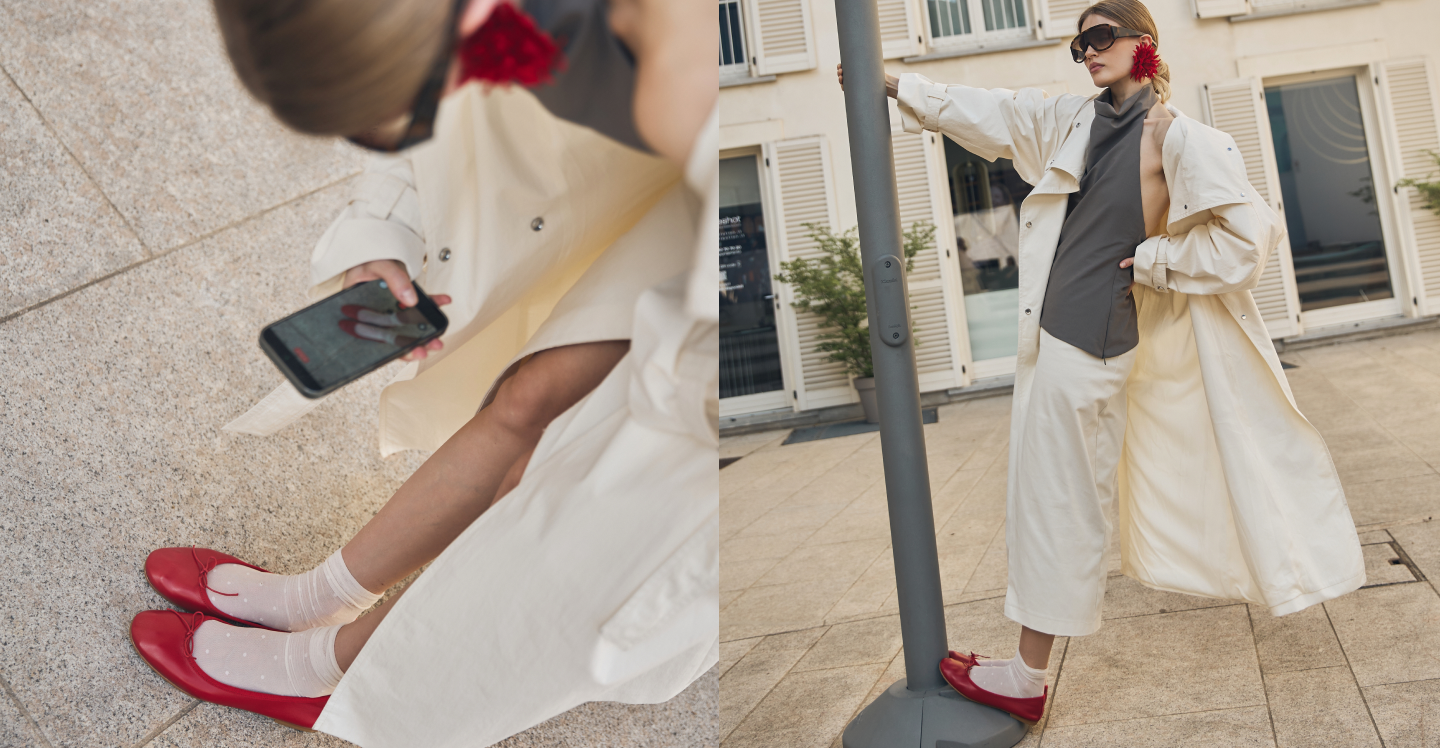
Ballet flats are having the most commercially sustained comeback of any footwear category. The global ballet flats market was valued at $18.5 billion in 2025 and is projected to grow to $26.1 billion by 2031, at a CAGR of 5.93%. [WeReports, November 2025] Pointed-toe ballet flat searches surged to a normalized score of 89 in March–April 2025, aligning with spring fashion cycles. [Accio.com, 2025 data]
The 2026 ballet flat is not the round-toe, thin-soled style of 2007. Today's version features an almond or pointed toe, quality leather upper, cushioned insole, and a sole thick enough for real city walking. High-vamp flats (with a higher-cut front) are leading the trend, popularized by The Row, Phoebe Philo, and Aeyde. [Marie Claire, January 2026]

- Why it beats a sneaker: A ballet flat appears intentional and polished in office, smart-casual, and dinner settings where sneakers would require reworking the outfit. It also packs flat in a travel bag.
- Best scenario coverage: Office (smart-casual), jeans, skirts, dresses, summer outfits, travel.
- Where to buy in Italy: Guja Ballet Flats — Italian-crafted pointed and almond-toe ballet flats.
- Investment level: Medium. Budget €80–€250. Replace every 2–4 years with regular wear.
Pair 3 — The Minimalist Strappy Sandal: The Warm-Weather Essential
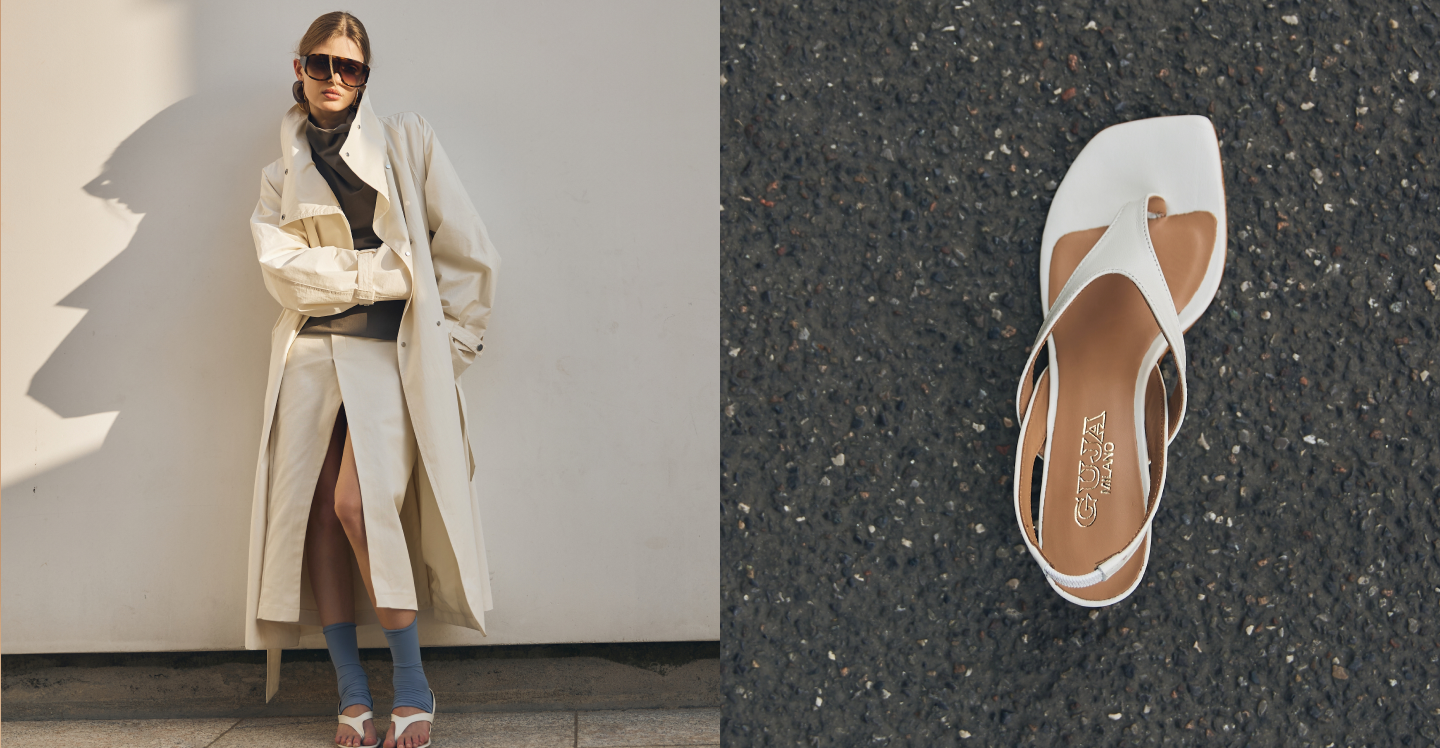
One quality sandal covers 80% of warm-weather occasions. The Who What Wear summer capsule wardrobe guide (May 2026) confirms that 'minimalist leather sandals are eternally chic' and represent one of the six core pairs for the season. The key word is 'minimalist' — this is not an embellished event sandal, but a simple flat or near-flat leather strap design in tan, nude, white, or black.
The quiet luxury aesthetic that defines 2026 dressing favours restraint in sandals: thin leather straps, no hardware, a sole that lies almost flush with the foot. The Row, Khaite, and Toteme lead this silhouette at the luxury level; accessible alternatives exist at every price point.

- Best scenario coverage: Summer casual, evening, beach-to-city, holiday travel, warm-weather jeans or linen.
- Where to buy in Italy: Guja Sandali — minimalist and strappy styles, Made in Italy.
- Investment level: Medium. Budget €80–€300. Quality leather sandals last 3–5 seasons.
Pair 4 — The Ankle Boot: The Cool-Weather Workhorse
An ankle boot with a flat or low block heel (2–4 cm) is worn 3–5 times per week throughout autumn and winter by most women who own one. No other shoe covers the same breadth of cool-weather occasions: dark jeans, straight trousers, midi skirts, knit dresses, layered coats. The slightly pointed toe creates a leg-lengthening effect that a round-toe boot does not.
For 2026, the preferred ankle boot is sleek and unfussy: no excessive buckles, no extreme heel, no visible platform. Black is the most versatile colour; tan or cognac adds warmth and pairs particularly well with autumn palettes.

- Best scenario coverage: Autumn–Winter office, weekend, evenings, travel — effectively all cool-weather occasions.
- Investment level: High. Budget €150–€500. A well-made ankle boot will last 4–7 years. This is the second most important capsule investment after the loafer.
Pair 5 — The Low-Profile Sneaker: For High-Walking Days
In 2026, the preferred sneaker for a minimalist wardrobe is slim, low-profile, and clean. Think Adidas Samba, New Balance 574 in a neutral, or an Italian leather sneaker with a thin profile. Chunky trainers conflict with the streamlined 2026 aesthetic and are harder to dress up.
The low-profile sneaker has the highest per-week wear frequency of any capsule pair. It is also the most important shoe for travel, city walking, and any day where comfort must lead.

- Best scenario coverage: Weekend, travel, casual errands, gym-adjacent — not office or formal events.
- When it does NOT replace a loafer: Office, smart-casual dinner, formal occasions — the sneaker communicates casual intent even when clean and expensive.
- Investment level: Medium. Budget €80–€250. Replace every 1–2 years or 300–500 km of regular use.
Pair 6 — The Kitten Heel Mule or Slingback: For 20% of Occasions That Matter Most
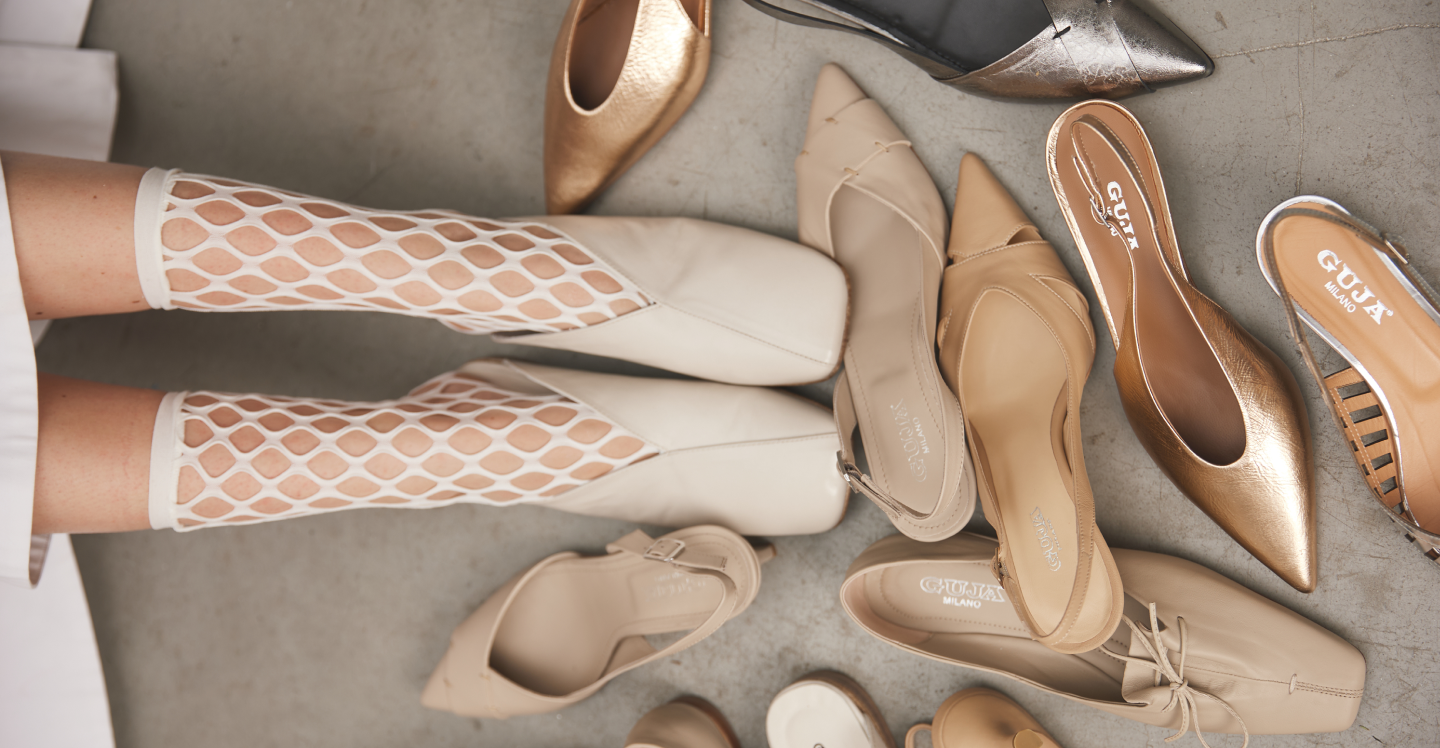
This is the pair that most capsule wardrobes forget until they desperately need it: a wedding, a smart dinner, a job interview. A kitten heel mule or slingback in satin, leather, or suede covers all of these without requiring a full heel. The 2–4 cm kitten heel is the most comfortable elevated option for walking.
Who What Wear's spring 2026 shoe capsule Specifically cites 'Parisian-approved silhouettes — like refined T-strap pumps and elegant loafers' as the fifth essential pair, noting that 'great shoes should seamlessly take you from the office to happy hour.'

- Best scenario coverage: Weddings, smart dinners, presentations, office-to-evening, formal events.
- Where to buy in Italy: Guja Slingback and Guja Decollete.
- Investment level: Medium. Budget €100–€400. Worn less frequently so cost-per-wear is higher, but the occasions where you need it are irreplaceable.
The 2026 Capsule Shoe Wardrobe: Investment Framework
|
Priority |
Pair |
Budget range |
When to buy |
How long it lasts |
|
1 — Core anchor |
Leather loafer |
€120–€400 |
Buy first — works immediately across all seasons |
5–8 years with care |
|
2 — Core everyday |
Ballet flat (almond/pointed toe) |
€80–€250 |
Buy second — fills the gap between loafer and sandal |
2–4 years |
|
3 — Seasonal essential |
Minimalist sandal |
€80–€300 |
Buy for first warm season after building core |
3–5 seasons |
|
4 — Seasonal essential |
Ankle boot |
€150–€500 |
Buy for first cool season after building core |
4–7 years |
|
5 — High-frequency comfort |
Low-profile sneaker |
€80–€250 |
Buy when daily walking demands comfort over polish |
1–2 years |
|
6 — Occasion anchor |
Kitten heel mule / slingback |
€100–€400 |
Buy before first formal occasion — not proactively |
2–4 years |
"Simple leather sneakers, black loafers, sleek ankle boots, and minimal sandals tend to work with the widest range of outfits because they balance casual and polished clothing equally well." — thecapsulist.com, May 2026
Color Strategy: The 3-Neutral Rule
A capsule shoe wardrobe works best when colors follow a simple rule: a maximum of 3 neutrals, with one warm and one cool tone represented.
- Black: Suitable for office, formal, and evening occasions universally. Best for loafers, ankle boots, and kitten heels.
- Tan / cognac / camel: Adds warmth, pairs beautifully with denim, neutrals, and autumn palettes. Best for loafers (second pair), sandals, and ankle boots.
- Nude / cream / off-white: Elongates the leg, particularly powerful with skirts and dresses. Best for sandal, ballet flats, and kitten heel.
Pattern or color in your shoe wardrobe is additive — never the foundation. One fun pair (metallic, red, or pattern) can exist alongside the 6 core pairs without disrupting the capsule logic.
Where to Shop Your Capsule in Italy
- Guja Mocassini — leather loafers (Pair 1). Made in Italy, available in Milan & Rome, free shipping.
- Guja Ballet Flats — ballet flats (Pair 2). Italian-crafted pointed and almond-toe styles.
- Guja Sandali — minimalist sandals (Pair 3). Strappy and thong styles in quality leather.
- Guja Slingback + Guja Decollete— kitten heel options (Pair 6).
FAQ — Minimal Shoe Wardrobe 2026
How many pairs of shoes do I actually need?
Research on capsule wardrobes consistently points to 5–7 pairs as the optimal number for everyday versatility across work, casual, travel, and occasion dressing. The key is scenario coverage, not quantity.
Can a loafer replace both sneakers and heels?
Partly. A loafer covers the office and smart-casual occasions that a heel covers, and the elevated-casual occasions that a sneaker covers. It cannot replace a sneaker for high-intensity walking days or a heel for formal events — those gaps are why Pairs 5 and 6 exist in the capsule.
Should I buy cheap shoes to save money?
No — cost-per-wear favors quality. A €300 leather loafer worn 200 times costs €1.50 per wear. A €60 pair worn 15 times costs €4.00 per wear and requires replacement every season. For the core pairs (loafer, ankle boot), invest at the mid-to-high level. For trend additions, a lower budget is appropriate.
Is a ballet flat professional enough for the office?
Yes — in 2026, a quality leather ballet flat with an almond or pointed toe is fully accepted across business casual and creative professional environments. The shift from heels to quality flats as the default office shoe is one of the defining workwear transitions of the decade. → Guja Ballet Flats
Can I build a capsule shoe wardrobe gradually?
Yes — and this is recommended. Start with Pair 1 (loafer) and Pair 2 (ballet flats) as the immediate foundation. Add Pair 3 (sandal) or Pair 4 (boot) depending on your current season. Pairs 5 and 6 follow based on lifestyle need.
Sources: thecapsulist.com (May 2026) · SkyQuest Research (2026) · WeReports Ballet Flats Market (November 2025) · Accio.com (2025 data) · Marie Claire (January 2026) · Who What Wear (March 2026) · Precedence Research (April 2026)